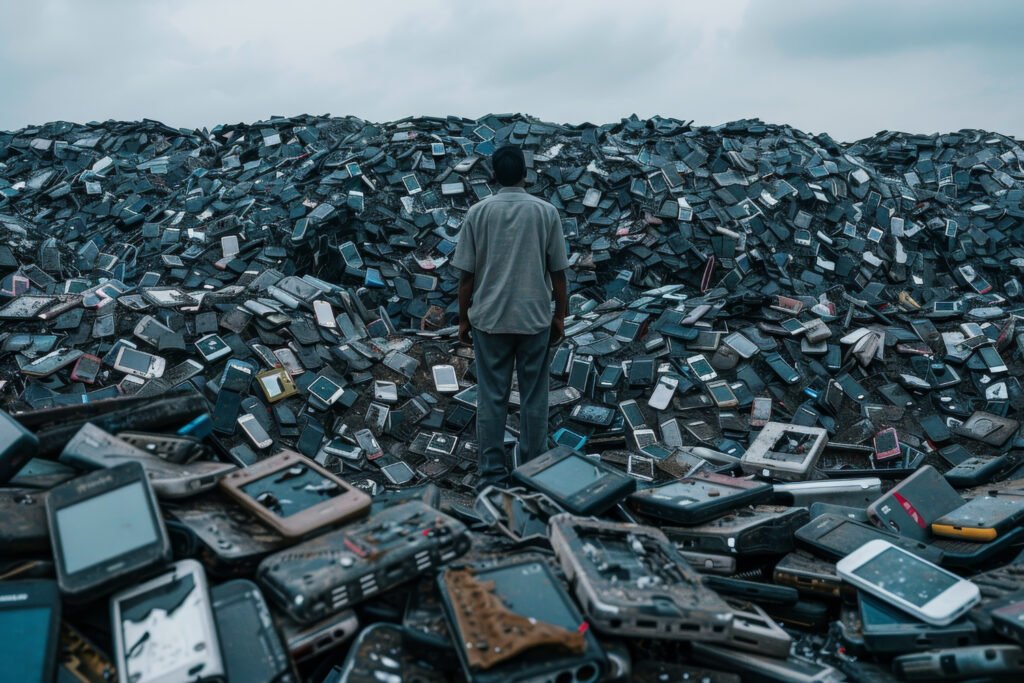
eWaste

Blog

Your blog category

Blog

Whales: Giants of the Ocean

Whales: Giants of the Ocean Whales are among the largest and most remarkable animals on Earth. These marine mammals live in oceans around the world, from warm tropical waters to the cold seas surrounding the poles. Life Beneath the Surface Although whales spend their lives in water, they breathe air through blowholes located on top of their heads. They must regularly return to the surface to breathe before diving again in search of food or traveling through the ocean. Whales are warm-blooded, give birth to live young, and nurse their calves with milk. A thick layer of fat called blubber helps protect them from cold water and stores energy during long migrations. Two Main Groups Whales are generally divided into baleen whales and toothed whales. Baleen whales filter small animals from the water using flexible plates inside their mouths. This group includes blue whales, humpback whales, and gray whales. Toothed whales use teeth to catch fish, squid, and other prey. Many of them also use echolocation, producing sounds and listening for returning echoes to understand their surroundings. Sperm whales, belugas, and orcas belong to this group. The Blue Whale The blue whale is the largest known animal to have ever lived. An adult can grow longer than a city bus and weigh well over one hundred tonnes. Despite its enormous size, it feeds mainly on tiny crustaceans called krill. Communication and Migration Whales communicate using clicks, whistles, pulses, and complex songs. Some sounds can travel across great distances underwater. Humpback whales are especially famous for their long, patterned songs. Many species migrate thousands of kilometres each year. They often feed in cold, nutrient-rich waters before traveling to warmer regions where they mate and give birth. Protecting Whales Commercial hunting once caused severe declines in many whale populations. Today, whales also face threats from fishing gear, ship collisions, underwater noise, pollution, and changes to ocean ecosystems. Conservation programs, safer fishing practices, protected habitats, and international cooperation can help whale populations recover. Protecting whales also supports healthier oceans because these animals play an important role in marine food webs and nutrient cycles.

Blog

Founding of YouTube A Short History

YouTube is one of the most influential platforms in modern media, but its origin story is surprisingly simple: a small team wanted an easier way to share video online. In the early 2000s, uploading and sending video files was slow, formats were inconsistent, and most websites weren’t built for smooth playback. YouTube’s founders focused on removing those barriers—making video sharing as easy as sending a link. Who Founded YouTube? YouTube was founded by three former PayPal employees: Chad Hurley, Steve Chen, and Jawed Karim. They combined product thinking, engineering skills, and a clear user goal: create a website where anyone could upload a video and watch it instantly in a browser. Chad Hurley — product/design focus and early CEO role Steve Chen — engineering and infrastructure Jawed Karim — engineering and early concept support The Problem YouTube Solved At the time, sharing video often meant emailing huge files or dealing with complicated players and downloads. YouTube made video: Uploadable by non-experts (simple interface) Streamable in the browser (no special setup) Sharable through links and embedding on other sites Early Growth and the First Video YouTube launched publicly in 2005. One of the most famous early moments was the first uploaded video, “Me at the zoo,” featuring co-founder Jawed Karim. The clip was short and casual—exactly the kind of everyday content that proved the platform’s big idea: ordinary people could publish video without needing a studio. Key Milestones Timeline Year/Date Milestone Why It Mattered 2005 YouTube is founded and launches Introduced easy browser-based video sharing 2005 “Me at the zoo” is uploaded Became a symbol of user-generated video culture 2006 Google acquires YouTube Provided resources to scale hosting and global reach Why Google Bought YouTube By 2006, YouTube’s traffic was exploding. Video hosting is expensive—bandwidth and storage costs rise fast when millions of people watch content daily. Google’s acquisition gave YouTube the infrastructure and advertising ecosystem to grow into a sustainable business. What YouTube’s Founding Changed YouTube didn’t just create a popular website; it reshaped how people learn, entertain themselves, and build careers online. Its founding helped accelerate: Creator-driven media and influencer culture How-to education and free tutorials at massive scale Music discovery, commentary, and global community trends From a small startup idea to a global video powerhouse, YouTube’s founding is a classic example of a simple product solving a real problem—and changing the internet in the process.

Why Corporate Leaders in India Must Prioritize E-Waste Management in 2025?
Blog

Why Corporate Leaders in India Must Prioritize E-Waste Management in 2025?

As an Environment, Health, and Safety (EHS) leader, your role goes beyond compliance—it’s about protecting your organization, the environment, and public health. While companies are actively reducing carbon footprints and implementing sustainability initiatives, there’s one issue that often gets sidelined: E-Waste Management. With India being one of the world’s largest producers of electronic waste, the regulatory landscape is tightening, and EHS heads can no longer afford to ignore e-waste compliance. Let’s explore why 2025 is the year to act on e-waste management and how staying ahead of regulations can protect your company from legal, financial, and reputational risks. The E-Waste Reality in India: Why It’s an Urgent Issue 💡 India generates over 1.7 million tons of e-waste annually—but only 22% is formally collected and recycled. The rest? It either lands in informal recycling hubs or illegal dump sites, causing significant environmental and health hazards. 🔍 EHS leaders are now directly responsible for ensuring their company’s e-waste is handled legally, ethically, and sustainably. The days of informal disposal practices are over. 🚨 What’s at Stake? For EHS heads, the message is clear: E-Waste is not just an IT issue—it’s an environmental and corporate compliance priority. EHS Leaders and EPR: What You Need to Know One of the biggest shifts in e-waste regulations is the Extended Producer Responsibility (EPR) framework. While originally aimed at electronics manufacturers, bulk consumers (i.e., large enterprises, IT firms, financial institutions, and manufacturers) are now expected to: ✅ Ensure e-waste is handed over ONLY to CPCB-registered recyclers.✅ Obtain a compliance certificate for e-waste disposal.✅ Maintain records of e-waste disposal for audits. EHS teams must now actively oversee and report on e-waste management—just like hazardous waste and other environmental compliance measures. 💡 Did You Know?Under the E-Waste (Management) Rules, 2022, companies exceeding their e-waste recycling targets can sell surplus recycling credits, turning compliance into a financial opportunity. Best Practices for EHS Heads to Manage E-Waste Effectively ✅ Conduct an E-Waste Audit ✅ Partner with a CPCB-Approved Recycler ✅ Implement Secure Data Destruction ✅ Train Employees on Proper E-Waste Handling ✅ Integrate E-Waste Compliance into ESG & CSR Strategies How Benir Supports EHS Leaders with End-to-End E-Waste Compliance At Benir, we specialize in bulk e-waste management for large enterprises, providing: 🔹 CPCB-Approved Recycling – Ensuring full compliance with E-Waste (Management) Rules, 2022.🔹 Secure Data Destruction – Certified shredding, degaussing, and wiping of sensitive data.🔹 Corporate E-Waste Collection – Hassle-free pickup and logistics for large-scale e-waste disposal.🔹 Regulatory & ESG Reporting – Detailed impact reports for corporate sustainability disclosures.🔹 Zero-Liability Disposal – Avoid legal risks with government-certified recycling solutions. Final Thought: EHS Leadership in E-Waste Starts Now As an EHS head, your role in e-waste compliance and sustainability has never been more critical. With regulatory scrutiny increasing, companies that proactively implement responsible e-waste strategies will stay ahead of compliance risks and enhance their ESG credentials. 🚀 Is your company’s e-waste strategy up to date? Let’s work together to make it seamless and compliant. 👉 Schedule an E-Waste Consultation with Benir

Your Old Laptop’s Secret Life After You Throw It Away
Blog

Your Old Laptop’s Secret Life After You Throw It Away

Ever wonder what happens to your old laptop after you finally upgrade to that sleek new model? You might think it just disappears—but nope, that little workhorse goes on quite the adventure. Let’s take a fun, behind-the-scenes look at the secret life of discarded electronics and why it matters more than you think! Step 1: The Abandonment Phase 😢 One day, after years of faithful service, your laptop starts getting sluggish. The battery barely lasts an hour, and opening five Chrome tabs turns it into a jet engine. You sigh, back up your files, and replace it with something shiny and fast. Where does the old laptop go? Probably into a drawer of forgotten electronics, sitting next to old phones, tangled cables, and a calculator you haven’t touched since college. But eventually, you decide to get rid of it… and that’s where things get interesting. Step 2: The Crossroads 🤔 Now, your laptop has two possible fates: Option 1: It goes to a certified e-waste recycler (like Benir!) and is safely dismantled, refurbished, or properly recycled.Option 2: It gets dumped in the trash or handed over to an informal recycler who strips it for valuable parts but dumps the toxic leftovers. Unfortunately, 80% of e-waste globally isn’t recycled properly—which is a huge problem. Electronics contain lead, mercury, and cadmium, which can leach into soil and water, harming the environment. Lucky for your laptop, you chose Option 1—so off it goes to a certified e-waste facility! Step 3: The Makeover or the Meltdown 🔄 At the e-waste facility, your laptop faces another fork in the road. 💻 Refurbishment? If it’s still functional, it gets repaired, upgraded, and sent off to a new owner—maybe a student or small business that needs an affordable computer. 🔥 Recycling? If it’s too far gone, it gets dismantled, and its components are recovered: These materials are sent off to manufacturers to be used in brand-new gadgets! Fun fact: Your next smartphone might have parts from an old laptop just like yours! Step 4: The Environmental Payoff 🌱 By recycling your laptop, you’ve done more than just clear out clutter. You’ve helped:✅ Reduce mining demand for raw materials✅ Cut down electronic waste in landfills✅ Lower carbon emissions from new electronics production Plus, if you chose Benir for your e-waste recycling, you’ll even get a certificate proving your environmental impact—which is pretty cool. Moral of the Story? Be a Hero for Your E-Waste! 🦸‍♂️ Instead of letting your old devices rot in a drawer or end up in a landfill, give them a second life through proper e-waste recycling. Not only does this help the environment, but it also supports the circular economy—where old gadgets get transformed into new ones instead of becoming trash. So, the next time you upgrade, ask yourself: Where will my old device go? Hopefully, on an exciting adventure toward sustainability! 🚀 Got old electronics? Let’s recycle them the right way!📩 Schedule an E-Waste Collection with Benir

E-Waste Recycling in India: Everything Businesses Need to Know in 2025
Blog

E-Waste Recycling in India: Everything Businesses Need to Know in 2025

Introduction E-waste is the fastest-growing waste stream in the world, and India is one of the largest e-waste generators, producing over 1.7 million tons annually. With businesses upgrading IT infrastructure, replacing outdated equipment, and expanding digital operations, managing e-waste has become a critical challenge. But here’s the problem: most businesses don’t know how to recycle e-waste properly. Worse, improper disposal can lead to legal penalties, environmental damage, and data security risks. So, if you’re a business owner, IT manager, or sustainability officer wondering how to legally and responsibly dispose of e-waste in India, this guide is for you. What is E-Waste? E-Waste, or electronic waste, includes any discarded electrical or electronic device. This can be anything from:✅ Computers, laptops, and servers✅ Mobile phones, tablets, and accessories✅ Printers, scanners, and office equipment✅ Networking equipment (routers, switches, modems)✅ Home appliances like ACs, refrigerators, and TVs✅ Batteries, cables, and circuit boards If your business generates any of the above, you’re legally required to recycle them properly under India’s e-waste regulations. Why Should Businesses Care About E-Waste Recycling? 1. Legal Compliance 🚨The E-Waste (Management) Rules, 2022 require businesses (especially bulk consumers like IT firms, manufacturers, and financial institutions) to:✅ Hand over e-waste only to CPCB-registered recyclers✅ Maintain records of e-waste disposal✅ Submit compliance reports when required Failure to do so can result in legal penalties and fines. 2. Data Security Risks 🔓Old laptops, hard drives, and servers often contain sensitive business data. If not securely destroyed, this data can be recovered and misused, leading to:❌ Data breaches❌ Cybersecurity risks❌ Regulatory fines under GDPR, ISO 27001, and India’s IT Act 3. Environmental & ESG Impact 🌱Improper e-waste disposal leads to:❌ Toxic chemicals like lead, mercury, and cadmium polluting land and water❌ Wasted resources—electronics contain gold, silver, and copper that can be recovered❌ Negative ESG (Environmental, Social, and Governance) ratings, impacting business reputation Top corporations now include e-waste management in their ESG reporting—is your company keeping up? How to Recycle E-Waste Legally in India (Step-by-Step Guide) ✅ Step 1: Identify Your E-Waste ✅ Step 2: Find a CPCB-Registered Recycler ✅ Step 3: Secure Data Destruction ✅ Step 4: Obtain a Recycling Certificate ✅ Step 5: Report E-Waste Disposal (If Required) How Benir E-Waste Solutions Can Help Your Business At Benir E-Waste Solutions, we make e-waste recycling easy, legal, and secure for businesses. ✅ CPCB-Registered Recycler – Fully compliant with India’s e-waste rules✅ Secure Data Destruction – Certified shredding, degaussing, and wiping✅ Bulk E-Waste Collection – On-site pickup for large enterprises and IT firms✅ Sustainability & ESG Reporting – Get documentation for corporate compliance✅ Zero-Liability Disposal – Avoid legal penalties with fully compliant recycling Final Thoughts: Don’t Risk Your Business Over E-Waste E-waste isn’t just an environmental issue—it’s a business risk. Compliance with e-waste recycling laws is now a necessity, not an option. 🚀 Ready to recycle your e-waste the right way? Contact Benir E-Waste Solutions today for a hassle-free consultation! 👉 Schedule Your E-Waste Consultationhttps://benirewaste.com/contact/

The Corporate E-Waste Problem: Why Your Company Can’t Ignore It Anymore
Blog

The Corporate E-Waste Problem: Why Your Company Can’t Ignore It Anymore

In boardrooms worldwide, sustainability and ESG (Environmental, Social, and Governance) goals have become key business priorities. Companies are investing millions into green energy, carbon neutrality, and waste reduction—but there’s one critical issue that often gets overlooked: E-Waste. For large corporations, electronic waste isn’t just an operational inconvenience—it’s a risk to compliance, data security, and corporate reputation. Let’s break down why e-waste should be a top priority for your leadership team and how addressing it can turn waste into an opportunity. The Hidden Risks of Corporate E-Waste Most companies deal with IT asset upgrades, data center decommissioning, and electronic equipment turnoverregularly. But what happens to the old hardware? If e-waste is not managed properly, it can lead to: 🚨 Regulatory Non-Compliance 🔓 Data Security Threats 🌍 Sustainability & ESG Goals The Business Case for Responsible E-Waste Management Rather than seeing e-waste as just another compliance headache, forward-thinking corporations are leveraging it for financial, strategic, and environmental gains. 💰 Cost Savings & Asset Recovery 📊 ESG & CSR Leadership 🛡 Data Security & Compliance How Leading Corporations Are Tackling E-Waste 🔹 Apple built a robotic system, Daisy, to disassemble iPhones and recover materials for reuse.🔹 Dell launched a global take-back program, refurbishing used IT equipment for resale.🔹 Japan’s Olympic Medals were made entirely from recycled e-waste donated by corporations and citizens. What’s the common factor? Proactive e-waste management is a hallmark of industry leaders. Why Partner with Benir for Corporate E-Waste Management? At Benir E-Waste Solutions, we work exclusively with bulk consumers like large enterprises, IT firms, manufacturers, and financial institutions to provide seamless, compliant, and secure e-waste management. ✅ CPCB-Approved Recycler – Fully compliant with the E-Waste (Management) Rules, 2022✅ Secure Data Destruction – Certified shredding, degaussing, and wiping to prevent data breaches✅ ITAD & Asset Recovery – Maximize the value of old IT assets through refurbishment and resale✅ ESG & Sustainability Reporting – Transparent tracking to support your company’s sustainability goals✅ Zero-Liability Disposal – Full compliance with environmental and data protection laws Final Thought: Future-Proof Your E-Waste Strategy The companies leading the sustainability race are the ones taking e-waste management seriously. With regulations tightening and ESG expectations rising, now is the time to establish a robust, future-proof e-waste strategy. 🔹 What is your company doing about its e-waste? If you’re ready to turn waste into opportunity, let’s talk. 👉 Schedule an E-Waste Consultation Today

Scroll to Top